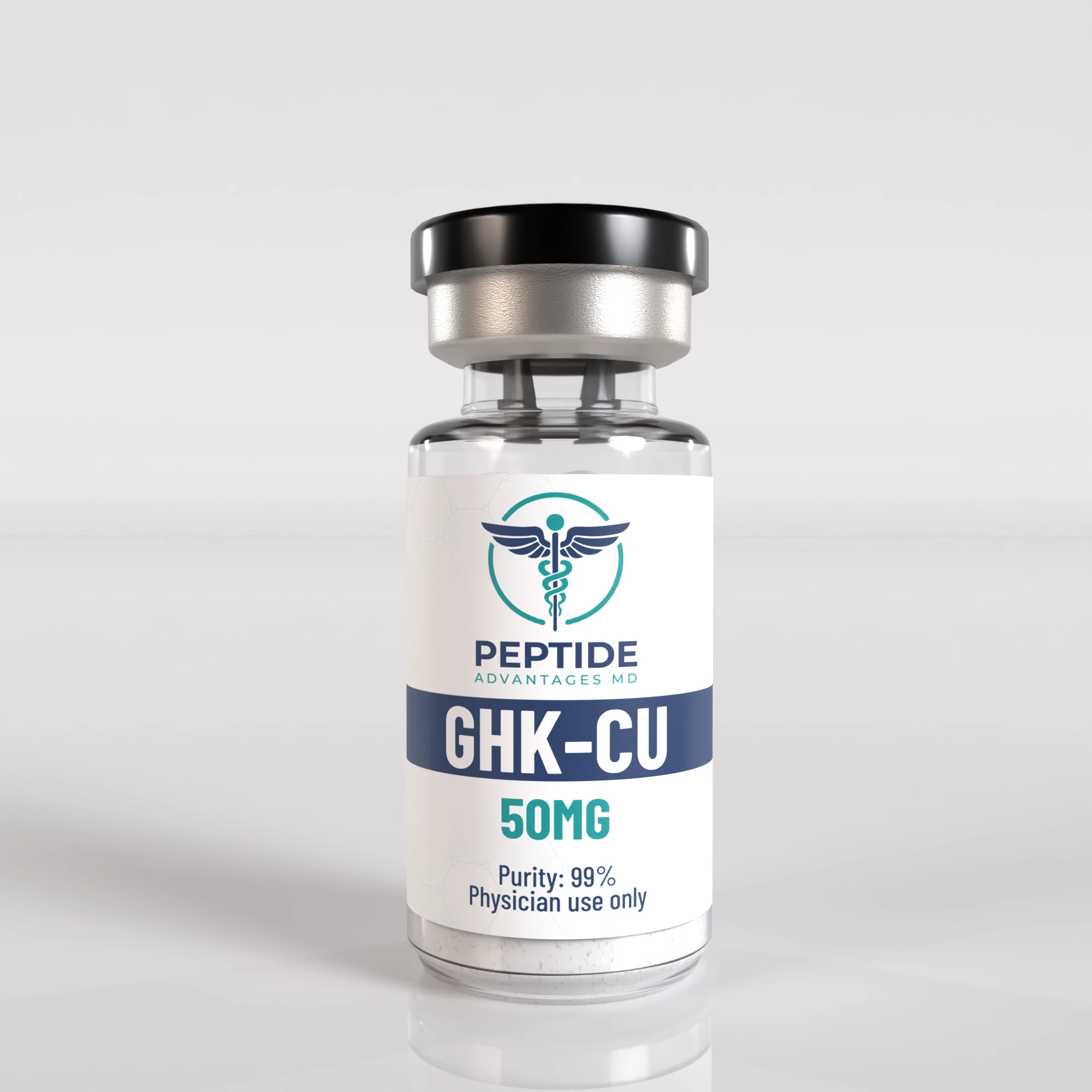

GHK-Cu (GHK-Copper Peptide) – 50MG
GHK-Cu, also known as Glycyl-Histidyl-Lysine-Copper Peptide, is a synthetic peptide derived from human plasma proteins and copper. This compound is primarily studied in research settings for its potential biological activity, particularly in cellular processes. Due to its unique composition, GHK-Cu has attracted significant attention in academic and scientific circles for its potential applications in cellular repair mechanisms.
Research Context
GHK-Cu was first discovered in human plasma and has been extensively studied for its role in skin repair, wound healing, and cellular maintenance. Its presence in biological systems has been associated with mechanisms that enhance tissue regeneration, improve collagen synthesis, and support overall cellular health. In the research community, GHK-Cu is utilized to explore its effects on various biological processes, including oxidative stress mitigation, extracellular matrix remodeling, and mitochondrial function.
Research Overview
GHK-Cu’s mechanism of action primarily involves its interaction with copper ions, which enhances its bioavailability and biological activity. Research has demonstrated that this peptide can promote fibroblast proliferation, collagen production, and wound healing in vitro and in vivo models. The peptide’s structure allows it to cross cellular membranes, making it a subject of interest for studying its role in tissue regeneration and repair pathways. However, it is important to note that its effects are evaluated strictly within the context of research studies and not as a therapeutic agent for any human or animal use.
Key Research Focus Areas
- Wound Healing and Tissue Repair: GHK-Cu has been investigated for its potential to accelerate wound healing through enhanced fibroblast activity and extracellular matrix production. Studies have explored its application in both acute and chronic wound environments.
- Skin Aging and Collagen Remodeling: Research has examined GHK-Cu’s role in promoting collagen synthesis and skin elasticity, particularly in the context of aging-related tissue degradation.
- Oxidative Stress and Cellular Health: The peptide’s interaction with copper has been explored for its potential to mitigate oxidative damage and support cellular resilience, including mitochondrial function and protein homeostasis.
- Neural Regeneration and Repair: Emerging studies have investigated GHK-Cu’s potential contributions to neural repair mechanisms, including its effects on axon regeneration and synaptic plasticity in experimental models.
Safety and Compliance
All materials sold within this store are intended solely for use in academic research, laboratory investigations, and similar non-commercial applications. GHK-Cu must be handled with care and adhered to the established protocols for peptide research. Researchers must ensure compliance with all relevant regulatory guidelines, including those governing the use of biologically active compounds. This product is not intended for any therapeutic, diagnostic, or cosmetic purposes.
For research use only. Not for human or animal consumption.
| Size | 50MG |
|---|
Reviews
There are no reviews yet.